
From Ideas to Interiors: Finding the Right Interior Designer Near Me
Designing a home is more than choosing attractive furniture, colours, and decorative pieces. A well-designed interior should make everyday life easier, create a comfortable atmosphere, and reflect the personality of the people living there.
This is why choosing the right interior designer can make a significant difference to your project. Whether you are building a new home, renovating an apartment, or updating selected rooms, professional planning can help you make better decisions about space, materials, lighting, storage, and furniture.
For homeowners searching for an Interior Designer Near me, the challenge is not simply finding someone nearby. The right professional should understand your requirements, style, budget, and the practical needs of your home.
Start With How You Want to Live
Before selecting an interior designer, think about how you actually use your home.
A beautiful living room may look impressive, but if there is not enough seating for your family or storage for everyday items, the design may become inconvenient. Similarly, a stylish kitchen needs to be practical enough for regular cooking and cleaning.
Think about your daily routine and make a list of your priorities.
You may need:
- More storage for clothes and household items
- A comfortable living and dining area
- A practical modular kitchen
- A dedicated study or work area
- Better lighting throughout the home
- A children’s room with flexible furniture
- A peaceful bedroom with minimal clutter
- Easy-to-maintain materials and finishes
Sharing these requirements during the initial consultation gives the designer a better understanding of what your home needs.
Why Local Experience Can Matter
When homeowners search for an Interior Designer in Surat, they often focus on portfolios, photographs, and pricing. These are important, but local experience can also be useful.
Interior projects involve materials, contractors, suppliers, installation teams, site conditions, and project coordination. A designer familiar with the local market may have a better understanding of commonly available materials, workmanship, and practical project requirements.
Surat also has a wide variety of residential properties, from apartments and compact homes to larger independent houses. Each type of property requires a different approach to space planning.
A good interior design should respond to the actual property rather than simply reproduce a design seen somewhere else.
Look Beyond Beautiful Portfolio Pictures
A portfolio can tell you a lot about a designer’s visual style, but photographs alone should not be the deciding factor.
When reviewing previous projects, look at whether the designer has worked on spaces similar to yours. Consider the size of the property, type of rooms, design style, and level of customization.
For example, a compact apartment may require completely different planning from a large independent house. A minimalist interior may also require a different approach from a traditional or luxurious design.
Ask yourself:
- Does the designer understand different design styles?
- Are the spaces practical as well as attractive?
- Is there enough storage?
- Does the furniture arrangement make sense?
- Are lighting and electrical requirements properly considered?
- Does the overall design appear suitable for everyday living?
The goal is to find a professional whose approach matches your expectations.
Discuss Your Budget at the Beginning
Budget is one of the most important parts of any interior project.
You do not necessarily need expensive materials to create an attractive home. Good design is often about using the available budget intelligently and deciding where quality matters most.
During your consultation, discuss your approximate budget honestly. This allows the designer to suggest suitable materials, furniture, finishes, and solutions without creating unrealistic expectations.
Your overall interior budget may involve several areas, including:
- Modular kitchen work
- Wardrobes and storage
- Furniture
- Flooring
- Lighting
- False ceiling
- Wall finishes
- Curtains and soft furnishings
- Electrical work
- Decorative elements
It is also sensible to keep some flexibility for unexpected changes or additional requirements during execution.
Pay Attention to Space Planning
Space planning is one of the most important responsibilities of an interior designer.
The same room can feel completely different depending on how furniture, storage, lighting, and circulation are arranged. Poor planning can make a room feel crowded even when it has sufficient floor space.
A professional designer can help determine appropriate furniture sizes, walking spaces, storage locations, and functional zones.
For example, a living room should allow people to move comfortably between seating, entrances, windows, and other areas. A kitchen should provide an efficient relationship between preparation, cooking, washing, and storage areas.
Good planning makes the interior feel more natural because every element has a purpose.
Choose Materials for Everyday Use
Interior design is not only about appearance. Materials also influence durability, maintenance, and long-term satisfaction.
Before selecting laminates, tiles, wood finishes, countertops, fabrics, or wall treatments, consider how frequently the space will be used and how much maintenance you are willing to handle.
A material that looks beautiful in a showroom may not always be the most practical choice for a busy household.
Ask about:
- Durability
- Cleaning requirements
- Moisture resistance
- Maintenance
- Repair possibilities
- Availability of replacement materials
- Suitability for children or pets, where applicable
Your designer can help you balance appearance with practical requirements.
Lighting Can Change the Entire Interior
Lighting is sometimes treated as a finishing detail, but it should be considered during the design process.
A well-designed lighting plan can make rooms feel warmer, more comfortable, and more functional. Different areas may require different types of lighting.
For example, kitchens need useful task lighting, bedrooms may benefit from softer illumination, and living rooms can combine general lighting with decorative or accent fixtures.
Natural light should also be considered. Window placement, curtains, furniture positioning, and colour choices can influence how much natural light reaches different parts of the home.
The best interior design solutions consider both natural and artificial lighting from the beginning.
Create Storage That Keeps Your Home Organised
Storage is one of the areas where professional interior planning can have a practical impact on everyday life.
Without enough storage, even an attractive home can quickly become cluttered. On the other hand, excessive cabinets can make smaller rooms feel restricted.
The right balance depends on your lifestyle.
Bedrooms may require full-height wardrobes, while kitchens need organised cabinets for utensils and appliances. Entryways can benefit from shoe storage, and living areas may require concealed storage for electronics, books, or household items.
Custom storage solutions can help use corners, vertical space, and otherwise unused areas more effectively.
Ask Questions Before Finalising the Project
Before hiring an interior designer, have a clear conversation about the project.
Ask about the design process, estimated timeline, revisions, material selection, execution, contractor coordination, and communication during the project.
You should also understand what is included in the proposed service and what may be charged separately.
Clear communication at this stage can prevent misunderstandings later.
A professional relationship works best when both sides understand the project scope, responsibilities, expectations, and budget.
Consider the Complete Design, Not Individual Rooms
Another common mistake is designing every room independently.
A home feels more comfortable when there is some visual connection between different spaces. This does not mean every room needs identical colours or furniture. Instead, elements such as flooring, wood tones, lighting, textures, or colour accents can create continuity.
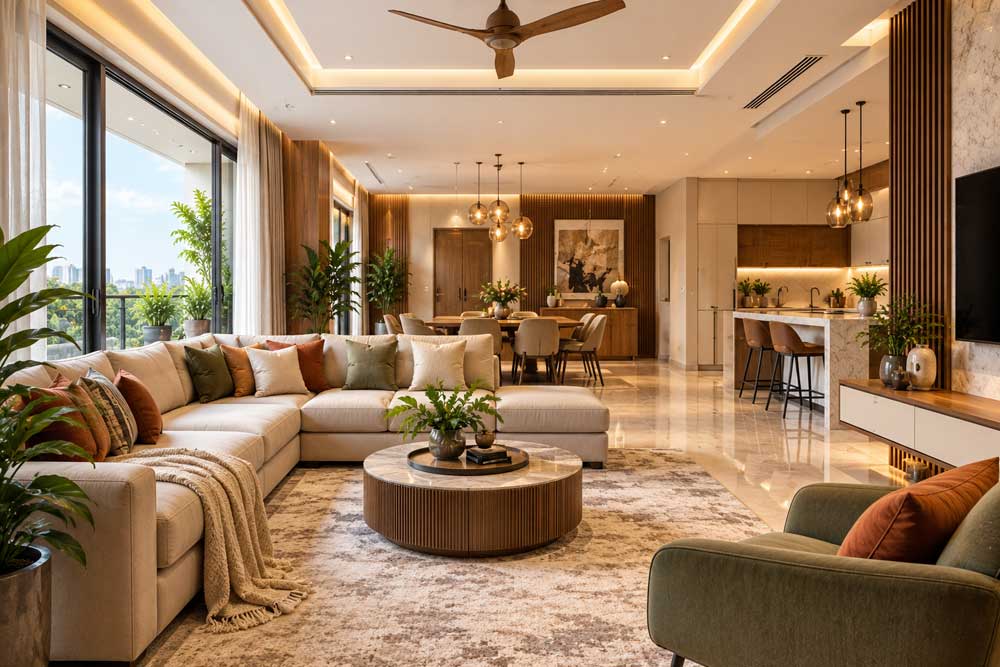
For example, a modern living room can connect naturally with the dining area through complementary materials and colours. Bedrooms can have their own personality while still fitting within the overall design language of the home.
This creates a home that feels thoughtfully planned rather than assembled room by room.
Finding the Right Interior Designer Near You
Searching for an Interior Designer Near me is often the first step, but proximity should not be the only consideration. Look at the designer’s experience, communication, previous projects, planning approach, and ability to understand your requirements.
If you are looking for interior design services Surat, compare professionals based on the type of projects they handle and how closely their approach matches your expectations.
Take time to discuss your ideas before making a decision. A good consultation can help you understand whether the designer is the right fit for your home.
If you are planning a residential interior project in Surat or nearby areas, Vaaste Architects and Interior Designer can help you discuss your requirements, explore suitable design ideas, and plan interiors around your lifestyle, available space, and project expectations. A consultation is a practical starting point for homeowners looking for professional interior design support.
Turn Your Ideas Into a Home That Works
The best interiors are not simply beautiful spaces. They are spaces that work well for the people who live in them.
From the initial layout and furniture planning to lighting, storage, materials, and finishing details, every decision contributes to the final experience. Taking professional guidance early can help you make these decisions with greater clarity.
Instead of starting with a particular trend or copying an online design, begin with your own lifestyle and requirements. Then work with an interior designer who can translate those ideas into a practical and comfortable home.
A thoughtful design process can turn an empty space into a home that feels personal, organised, functional, and truly yours.
